 How-to
Treating Fibrosis After Plastic Surgery: A Recovery Guide
Table of Contents
- Understanding Fibrosis After Plastic Surgery
- When to Start Massage After Plastic Surgery
- Massage for Fibrosis After Surgery: How It Works
- Hard Lumps After Liposuction: What They Are and How to Address Them
- At-Home Care and Self-Management Strategies
- Warning Signs: When to Contact Your Surgeon
- Common Mistakes to Avoid During Recovery
- Next Steps: Getting Professional Support
- Frequently Asked Questions
Last Updated: October 21, 2026
Understanding Fibrosis After Plastic Surgery
Fibrosis after plastic surgery is the buildup of scar tissue and stiffness that develops during healing. Your body creates fibrous tissue as part of the natural recovery process.
Fibrosis typically develops over weeks to months following surgery. It's your body's way of protecting the surgical site. However, excessive fibrosis can limit mobility and cause discomfort that interferes with daily activities.
The good news: fibrosis responds well to targeted treatment. At Lavendura Massage & Bodywork, we specialize in post-operative lymphatic drainage and therapeutic techniques designed to address fibrosis.
Common areas where fibrosis develops include:
- Liposuction sites (abdomen, thighs, flanks)
- Breast augmentation or reduction areas
- Facelift and neck lift zones
- Tummy tuck incision lines
- Any area where tissue was reshaped or repositioned
Understanding what's happening in your body helps you take the right steps forward. Fibrosis isn't permanent, and it's not a sign something went wrong. It's a normal part of healing that responds to proper care.
When to Start Massage After Plastic Surgery
Timing matters when treating fibrosis after plastic surgery. Starting too early can disrupt healing. Starting too late allows fibrosis to become more established and harder to address.
Most surgeons recommend waiting 4 to 6 weeks before beginning therapeutic massage. This allows initial incision healing and swelling reduction. Your surgeon may give you different guidance based on your specific procedure and healing progress.
Ask your surgeon specifically:
- When can I start light massage?
- Are there areas I should avoid?
- What symptoms mean I should wait longer?
- Should I see a massage therapist or physical therapist first?
Some patients see benefits starting gentle self-massage around week 3 or 4 with surgeon approval. Others need the full 6 weeks. Your individual healing speed determines the right timing for you.
Red flags that mean you should wait longer:
- Active drainage or fluid from incisions
- Significant swelling that hasn't started reducing
- Pain that worsens with any pressure
- Fever or signs of infection
- Surgeon hasn't cleared you for massage
Don't rush this step. Premature massage can cause complications. Waiting until your surgeon clears you ensures you're working with your body's healing timeline, not against it.
Massage for Fibrosis After Surgery: How It Works
Therapeutic massage breaks down fibrosis by applying specific pressure and movement techniques to scar tissue. The goal is to restore tissue mobility and reduce the hardness that develops during healing.
Massage works through several mechanisms. It increases blood flow to the area, bringing oxygen and nutrients that support healing. It also stimulates your lymphatic system, which drains fluid and reduces swelling.
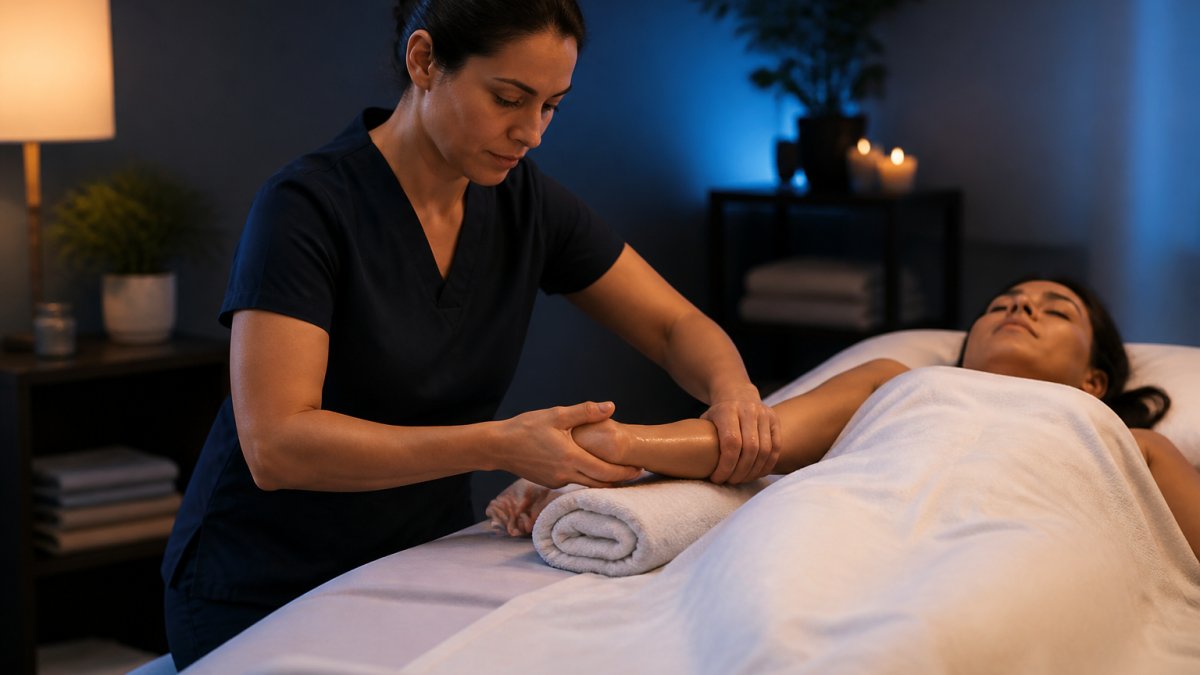
Treating fibrosis after plastic surgery requires specific skills. Generic massage won't address the problem effectively. Your massage therapist needs training in post-operative care and understanding of how surgical tissue heals differently than regular muscle.
Lymphatic Drainage Techniques
Manual lymphatic drainage (MLD) is a specialized technique that moves fluid away from the surgical site. It uses very light pressure and specific hand movements to activate your lymphatic vessels.
MLD works differently than regular massage. Instead of deep pressure, it uses gentle, rhythmic strokes that follow the direction of lymph flow.
Key benefits of lymphatic drainage:
- Reduces swelling and fluid buildup
- Decreases inflammation around surgical sites
- Improves circulation to healing tissue
- Prevents complications like seroma (fluid pockets)
- Prepares tissue for deeper work as healing progresses
Your lymphatic system has no pump like your heart. It relies on muscle movement and external stimulation to function. After surgery, this system gets overwhelmed with fluid. MLD helps it catch up and drain properly.
The technique requires certification and training. At Lavendura Massage & Bodywork, our therapists hold Manual Lymph Drainage Certification (MLD-C) and understand post-operative protocols. This expertise ensures you receive appropriate pressure and techniques for your specific healing stage.
Scar Tissue Mobilization
Once initial swelling reduces and your surgeon clears you, deeper techniques address the fibrosis itself. Scar tissue mobilization uses targeted pressure to break apart fibrous adhesions and restore tissue flexibility.
This technique feels different from regular massage. Your therapist applies sustained pressure to specific areas of fibrosis, then moves the tissue in different directions. This movement helps reorient collagen fibers and reduce the hardness characteristic of scar tissue.
Scar tissue mobilization addresses:
- Hard lumps and bumps under the skin
- Restricted movement in the surgical area
- Tightness that limits your range of motion
- Adhesions that bind tissue layers together
- Surface irregularities or dimpling
The process involves significant pressure and sensation. You should feel better after each session, not worse. If pain increases or continues worsening, tell your therapist immediately.
Consistency matters with scar tissue work. One or two sessions won't resolve fibrosis. Regular treatment over weeks gradually breaks down the tissue and restores normal texture and mobility.
Hard Lumps After Liposuction: What They Are and How to Address Them
Hard lumps after liposuction are fibrotic nodules, concentrated areas of scar tissue that form during healing. They feel like firm knots under the skin, often palpable to the touch.
These lumps develop because liposuction creates controlled trauma to break apart fat cells. Your body responds by forming protective scar tissue. In some areas, this tissue becomes denser and more noticeable than in others.
Hard lumps typically appear 2 to 4 weeks after liposuction. They often feel worse before they feel better. This is normal.
Addressing lumps requires patience and consistent care:
- Compression garments help reduce lump formation and density
- Gentle massage starting week 4 or 5 begins breaking down tissue
- Scar tissue mobilization (weeks 6-12) addresses established lumps
- Continued massage prevents lumps from returning
- Most lumps may resolve within 3 to 6 months with proper treatment
Not all lumps require intervention. Small, soft lumps often resolve on their own. Larger, harder lumps benefit from targeted massage therapy. Your surgeon can advise whether your specific lumps need treatment.
When to seek professional help for lumps:
- Lumps aren't softening after 8 weeks
- They're causing pain or restricting movement
- They're becoming more prominent rather than less
- You want faster resolution than natural healing provides
- Treating fibrosis after plastic surgery is your priority
At-Home Care and Self-Management Strategies
Professional massage therapy is valuable, but what you do at home matters equally. Consistent self-care accelerates healing and prevents fibrosis from worsening.
Gentle Movement and Exercise
Movement is medicine during recovery. Gentle activity increases blood flow, stimulates your lymphatic system, and prevents tissue from becoming overly stiff.
Start with basic movements your surgeon approves:
- Walking at a comfortable pace
- Gentle stretching in pain-free ranges
- Light arm circles or shoulder rolls
- Gradual increase in daily activity
- Avoiding heavy lifting or intense exercise until cleared
Movement should feel good, not painful. Pain is your signal to slow down. Gradual progression is the key. Week 2 looks different from week 6, which looks different from week 12.
Schedule your appointment today →
Specific movements help address fibrosis:
- Gentle massage of the surgical area using your own hands
- Slow, controlled stretching of affected areas
- Low-impact activities like walking or swimming
- Gradual return to normal exercise as approved by your surgeon
Your surgeon provides specific movement guidelines based on your procedure. Follow those guidelines first. General advice takes a back seat to your surgeon's personalized recommendations.
Compression and Elevation
Compression garments serve multiple purposes during recovery. They reduce swelling, support healing tissue, and help prevent excessive fibrosis from forming.
Wear compression as directed by your surgeon:
- Most surgeons recommend 24/7 wear for the first 1 to 2 weeks
- Then transition to daytime wear for 2 to 4 more weeks
- Some procedures require longer compression periods
- Proper fit is essential, too loose provides no benefit, too tight restricts circulation
Elevation works alongside compression. Keeping the surgical area elevated reduces fluid accumulation and swelling.
Simple elevation strategies:
- Sleep with extra pillows supporting the surgical area
- Use a sling or pillow to keep arms elevated during the day
- Sit with legs elevated when resting
- Avoid positions that increase swelling
Swelling directly contributes to fibrosis. Less swelling means less fibrosis develops. Compression and elevation are preventive tools that make treating fibrosis after plastic surgery easier down the road.
Warning Signs: When to Contact Your Surgeon
Most post-operative experiences follow a predictable healing pattern. Some situations require immediate medical attention.
Contact your surgeon if you experience:
- Fever over 101°F or chills
- Increasing redness, warmth, or drainage from incisions
- Separation of incision lines
- Severe pain not controlled by prescribed medication
- Unusual swelling that's worsening rather than improving
- Signs of infection like pus or foul odor
- Numbness or tingling that's spreading or worsening
- Inability to move the area after initial healing should allow movement
These symptoms may indicate infection, hematoma, seroma, or other complications. Early intervention prevents serious problems. Never assume a symptom will resolve on its own.
Also contact your surgeon before starting massage therapy if:
- You haven't received specific clearance
- Your healing seems slower than expected
- You have concerns about your progress
- You want guidance on finding a qualified massage therapist
Your surgeon and massage therapist should communicate about your care. At Lavendura Massage & Bodywork, we work collaboratively with surgeons and encourage clients to share their surgeon's recommendations with us.
Common Mistakes to Avoid During Recovery
Recovery success depends on what you avoid as much as what you do.
Starting massage too early. Waiting for full surgeon clearance prevents complications.
Using generic massage instead of specialized post-operative care. A spa massage won't address fibrosis. You need a therapist trained in post-operative techniques and lymphatic drainage.
Skipping compression garments. These aren't optional accessories.
Ignoring swelling. Swelling drives fibrosis. Elevation and compression prevent swelling from becoming excessive.
Pushing too hard too fast. Aggressive massage or intense exercise delays healing.
Stopping treatment too soon. Fibrosis doesn't resolve in two weeks.
Not communicating with your surgeon. Your surgeon needs to know how you're progressing.
Assuming all hard lumps are permanent. Most fibrosis responds to proper treatment. Patience and consistency usually win.
Neglecting at-home care. Professional massage is valuable, but consistent self-care between sessions accelerates results.
Comparing your recovery to others. Every body heals differently. Your timeline is yours alone.
Next Steps: Getting Professional Support
You don't have to navigate recovery alone. Professional support accelerates healing and prevents complications.
Finding the right massage therapist matters. Look for credentials like:
- Licensed Massage Therapist (LMT) credential
- Board Certification in Therapeutic Massage and Bodywork (BCTMB)
- Manual Lymph Drainage Certification (MLD-C)
- Medical Massage Practitioner (MMP) training
- Specific post-operative care experience
Ask potential therapists about their experience with post-operative clients. How many patients have they treated after surgery? What techniques do they use for treating fibrosis after plastic surgery? Can they provide references or case examples?
At Lavendura Massage & Bodywork in Hobart, our team includes Board Certified Licensed Massage Therapists with specialized training in post-operative lymphatic drainage.
We serve clients throughout Northwest Indiana, including Merrillville, Crown Point, Valparaiso, Gary, Hammond, Highland, and the broader Chicagoland area.
Your recovery is our priority. We work closely with your surgeon's recommendations and communicate your progress.
Treating fibrosis after plastic surgery requires patience, consistency, and proper guidance. Professional therapeutic massage combined with at-home care can support positive outcomes.
Frequently Asked Questions
Can I start massage therapy immediately after plastic surgery?
No. Your surgeon must clear you first, typically 2-4 weeks post-op depending on the procedure. Starting too early can disrupt healing and increase swelling. When to start massage after plastic surgery depends on your specific surgery type, incision location, and how well you're healing. Always follow your surgeon's timeline before beginning any massage therapy.
How does massage for fibrosis after surgery actually help?
Massage for fibrosis after surgery improves circulation, reduces inflammation, and helps break down adhesions and scar tissue. Lymphatic drainage massage specifically moves fluid away from the surgical area, reducing swelling and promoting healing. These techniques also restore mobility to affected tissues and can reduce pain and tightness as your body recovers.
What are hard lumps after liposuction and should I be worried?
Hard lumps after liposuction can be normal scar tissue, fibrosis, or fluid accumulation in the early healing phase. Some lumps resolve on their own within weeks to months. However, contact your surgeon if lumps are painful, growing, hot, or accompanied by redness, fever, or unusual swelling. A professional evaluation can determine if the lumps are normal healing or need intervention.
How long does it take for fibrosis to improve after surgery?
Fibrosis may improve over 3-6 months with proper care, though some patients see changes within weeks. Consistent massage therapy, gentle movement, and compression can support improvement. Complete resolution may take longer for extensive procedures. Individual healing varies based on surgery type, your body's response, and how diligently you follow post-op care and recovery protocols.