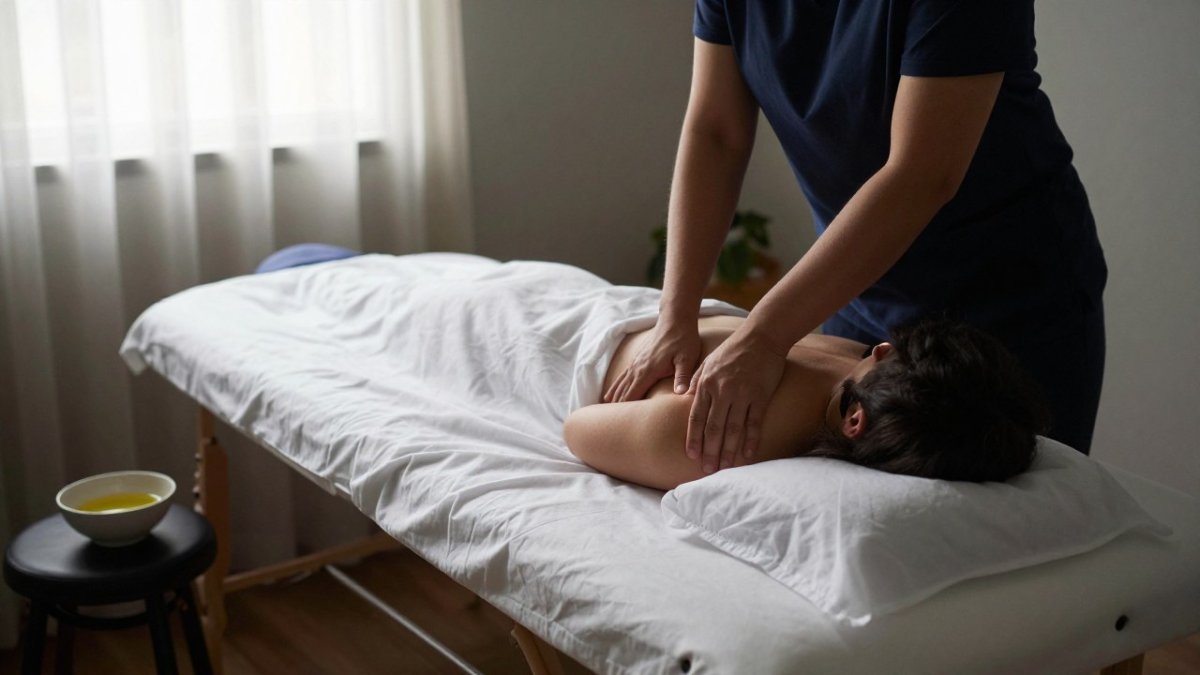
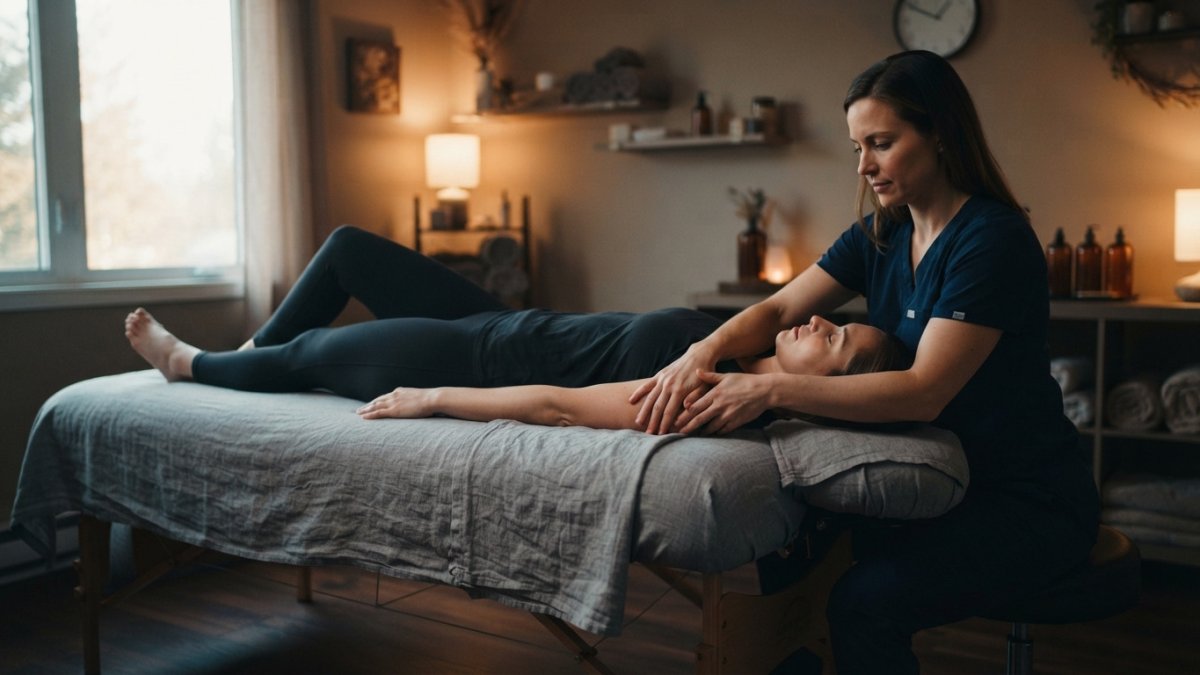
 How-to
5 Steps to Use Lymphatic Drainage After Surgery
Quick Summary
Lymphatic drainage for post surgical swelling is a gentle, hands-on technique that uses very light, slow strokes to guide extra fluid toward nearby lymph nodes. It supports comfort and can make compression garments easier to wear, but it does not replace your surgeon's instructions. Get surgeon clearance before your first session.
- Get your surgeon's approval before your first session; this matters more than any technique.
- A general schedule suggests 2 to 3 sessions per week during the first 3 to 4 weeks, set by your surgeon.
- Look for MLD-C training and ask how many post-operative clients the therapist has seen this year.
- Stop massage and call your surgeon for fever, spreading redness, or sudden one-sided leg swelling.
Table of Contents
- How Lymphatic Drainage Works and Why Swelling Builds Up After Surgery
- Step 1: Get Surgeon Clearance and Confirm Timing
- Step 2: Learn the Post Op Lymphatic Drainage Massage Techniques
- Step 3: Decide What You Can Safely Do Yourself at Home
- Step 4: Know the Warning Signs That Mean Stop and Call Your Surgeon
- Step 5: Find a Qualified Post Surgical Lymphatic Massage Provider Near You
- Booking Your Post-Surgical Session in Hobart
- Frequently Asked Questions
How Lymphatic Drainage Works and Why Swelling Builds Up After Surgery
Last Updated: November 7, 2026
Lymphatic drainage for post surgical swelling is a gentle, hands-on technique that helps move extra fluid out of tissue. Post-operative patients often ask the same question first: will this actually help?
Here is the short answer. Manual lymphatic drainage (MLD) uses very light, slow strokes to guide fluid through the lymph vessels toward nearby lymph nodes. It does not push fluid through the skin. The pressure is closer to the weight of a few coins than a deep tissue massage.
Surgery causes swelling for a clear reason. Tissue is cut, blood vessels leak fluid, and the body sends extra fluid to the area to start healing. Some of that fluid drains on its own. When the lymph system is slowed by the procedure, bed rest, or inactivity, fluid can pool in the tissue.
What MLD actually does, and does not do. The lymph system has no central pump. It relies on muscle movement, breathing, and vessel contractions to move fluid. MLD adds a gentle external push along the direction of flow, toward working lymph nodes near the neck, armpit, or groin. Many practitioners report that this can help the tissue feel less tight and can make compression garments more comfortable to wear. What MLD does not do is force fluid through skin, dissolve bruising, or replace the body's own healing. It is a support tool, not a treatment that guarantees faster healing or prevents complications.
What the evidence can and cannot tell you. Research on post-surgical MLD is still developing, and the quality varies by procedure. A plastic surgeon's article makes a useful counterpoint. It states there are no studies showing lymphatic massage helps post-surgical healing, and it names compression garments as the best way to reduce postoperative swelling (Lauren Greenberg, MD, on lymphatic massage after surgery). Ask your surgeon what they have seen work for your specific procedure.
Why swelling builds up, procedure by procedure. Swelling is not one thing. After abdominoplasty or a tummy tuck, fluid can collect along the incision line and in the lower belly, where the lymph channels were disrupted. After liposuction, the tunneling under the skin creates spaces that fill with fluid and bruising. After breast surgery, fluid can pool near the armpit if lymph nodes were removed or sampled. After a knee or hip replacement, swelling often settles in the calf and ankle because gravity and reduced walking slow the return of fluid. Each pattern changes where a therapist works and which areas to avoid. That is why a single generic routine is a poor fit.
Normal postoperative swelling versus lymphedema. Expected swelling after surgery is usually soft, improves with elevation and time, and follows the shape of the procedure. Lymphedema is a chronic buildup of protein-rich fluid that can develop when lymph nodes or vessels are damaged, and it often appears as persistent heaviness or tightness that does not resolve with rest (Lymphedema: From diagnosis to treatment). The two can look similar early on. Only your surgeon or a clinician trained in lymphedema can tell them apart, and that distinction changes the treatment plan.
- Good fit: Gentle work alongside surgeon-approved compression
- Not a substitute for: Your surgeon's instructions or medical care
- Watch for: Any change that seems to make swelling worse, or swelling that is sudden, one-sided, or paired with fever
Step 1: Get Surgeon Clearance and Confirm Timing
Always get your surgeon's approval before your first session. This matters more than any technique or schedule.
Timing depends on the procedure. A review of lymphatic massage in cosmetic procedures suggests a general schedule of 2 to 3 sessions per week during the first 3 to 4 weeks (The Utility of Lymphatic Massage in Cosmetic Procedures). Your surgeon may choose a different start date based on your incision, your healing, and your overall health.
Ask your surgeon these questions:
- When can I safely start lymphatic drainage?
- Are there areas I should avoid touching?
- Should I wear compression garments during sessions?
- How many sessions do you recommend?
Write the answers down and bring them to your first appointment.
The article gives a general schedule for sessions during early recovery, which can be summarised as follows.
| Item | Value | Note |
|---|---|---|
| Sessions per week | 2 to 3 | Typical schedule during early recovery |
| Duration of schedule | First 3 to 4 weeks | Start date depends on procedure and healing |
| Who sets the start date | Your surgeon | Based on incision, healing and overall health |
Step 2: Learn the Post Op Lymphatic Drainage Massage Techniques
A trained therapist uses a specific sequence of light strokes. The strokes move fluid toward working lymph nodes, usually near the neck, armpit, or groin.
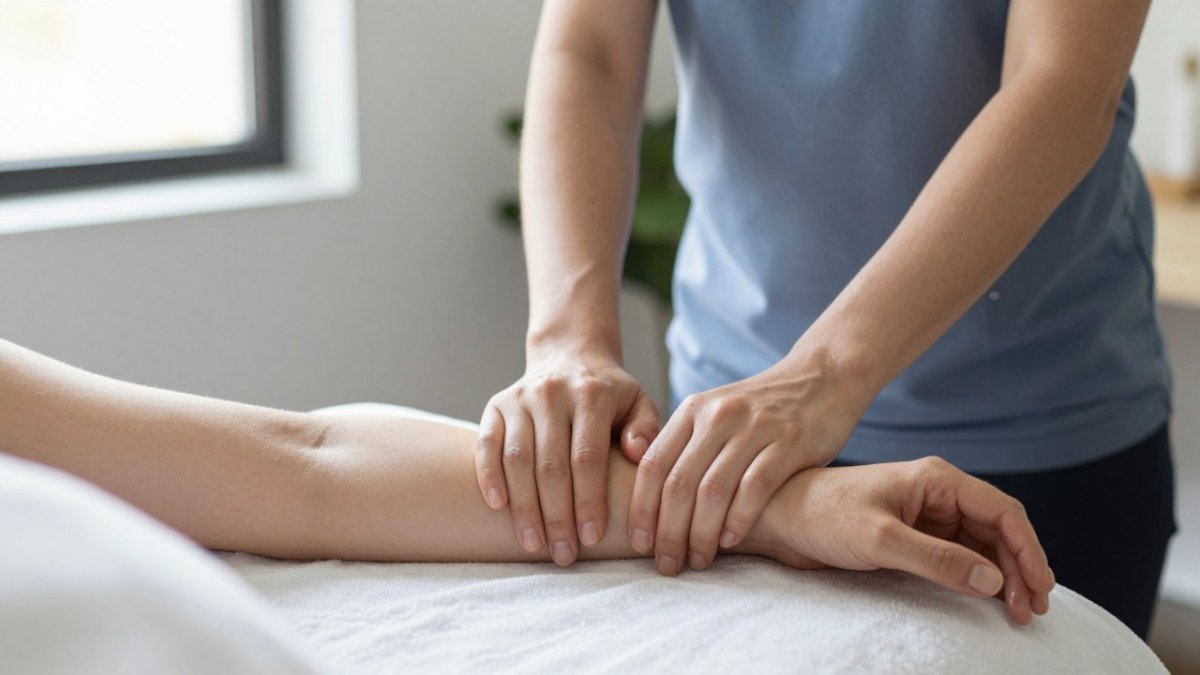
Common techniques include:
- Pumping: Slow, gentle circles that open lymph pathways
- Stretching: Light pulls on the skin to guide fluid
- Rotation: Circular movements around the joints
Watch out: Deep pressure can irritate healing tissue and bruising. Speak up if anything feels painful.
Ask the practice how long a session runs and whether it includes an intake and incision check.
Step 3: Decide What You Can Safely Do Yourself at Home
Some simple self-care steps are safe for most people, once your surgeon approves them. Gentle self lymphatic drainage massage uses the same light strokes, but it works best as a supplement to professional care, not a replacement.
Safe home habits often include:
- Keeping the surgical area elevated when resting
- Walking short distances as your surgeon allows
- Using compression garments exactly as directed
- Doing light, slow strokes toward the lymph nodes
Avoid pressing on incisions, drains, or areas that feel hard, hot, or painful. Do not massage a calf that is red, swollen on one side only, or tender, because that can signal a blood clot. Call your doctor first. Because these warning signs call for medical advice rather than massage, discuss when gentle lymphatic drainage may be appropriate with your doctor, and Cloud 9 Massage & Wellness can help you consider how it fits into post-surgery recovery.
Step 4: Know the Warning Signs That Mean Stop and Call Your Surgeon
Some symptoms are not normal and need prompt medical attention. Stop massage and call your surgeon if you notice:
- Fever or chills
- Redness, warmth, or spreading pain at the incision
- Pus, bad odor, or drainage that changes color
- Sudden swelling in one leg or calf
- Shortness of breath or chest pain (call 911)
- Swelling that gets worse instead of better
Swelling and bruising are common after surgery. Changes that are sudden, one-sided, or paired with fever are not.
Step 5: Find a Qualified Post Surgical Lymphatic Massage Provider Near You
Look for a therapist with specific training in post-surgical or manual lymphatic drainage. A general massage license alone does not guarantee this skill, and in Indiana a massage therapist license does not by itself certify MLD training. The credential to ask about is MLD-C (Manual Lymph Drainage Certified), which signals completed training in the Vodder-style technique, along with LMT (Licensed Massage Therapist) and, where listed, BCTMB (Board Certified in Therapeutic Massage and Bodywork).
Verify training, not just the license. Ask three concrete questions before you book: Where did you complete your MLD training, and how many hours did it include? How many post-operative clients have you worked with in the past year? Will you coordinate with my surgeon before the first session? A therapist who cannot answer these clearly is not the right fit for post-surgical care.
Coordinate with your operating surgeon. The safest pattern is a short loop: your surgeon provides written clearance that names the procedure, the date, any areas to avoid, and whether compression should be worn during sessions. You bring that clearance to your first appointment, and the therapist confirms it before touching the surgical area. If your surgeon has a preferred therapist or a list of approved providers, use it. If not, ask the therapist to send a brief note to your surgeon's office confirming the plan. This is especially important after breast surgery, lymph node removal, or any procedure where lymphedema risk is a concern.
Hobart access and logistics. When looking for a provider in the Hobart area, consider whether a mobile visit or an in-office visit suits your recovery. Whichever you choose, confirm the therapist has the relevant MLD training and will follow your surgeon's restrictions. Ask how long sessions run and whether the first visit includes an intake and incision check.
Cost, insurance, and referrals. Coverage for lymphatic massage varies by plan, so check with your insurer and ask any provider for its per-session rate and package pricing in writing before you book. If your surgery was medically necessary and your surgeon writes a referral, some plans may cover visits billed through a physical therapy clinic rather than a massage practice. Call your insurer with the procedure code your surgeon's office provides and ask specifically whether manual lymphatic drainage is a covered benefit.
Prepare for the appointment. Bring your surgeon's written clearance, a list of medications, the date and type of surgery, and any compression garment instructions. Wear or bring the garment your surgeon recommended. Arrive with clean, intact skin and tell the therapist about any drains, numbness, or areas that feel hot or painful.
Check these items before you book:
- Licensed massage therapist in Indiana
- Specific training in manual lymphatic drainage (ask for MLD-C)
- Experience with post-operative clients
- Willingness to coordinate with your surgeon and accept written clearance
- Clear answers about session length, per-session cost, and cancellation policy
Lavendura Massage & Bodywork lists LMT, BCTMB, MMP, and MLD-C credentials among its team's qualifications. You can read more about how to find a lymphatic specialist and review the certified lymphatic drainage therapist guide before booking. For a deeper look at what qualifications to check, see Find Certified Lymphatic Drainage Therapist: 2026 Guide.
Watch out: a therapist who pressures you to book a package before your surgeon clears you, or who will not share training details, is a reason to keep looking.
Booking Your Post-Surgical Session in Hobart
Mobile service options are available. If you are recovering at home, ask about mobile visits.
The practice focuses on clinical massage for post-operative patients, chronic pain, and limited mobility. We tailor each session to your surgery, your comfort level, and your surgeon's instructions. Before your first visit, we recommend asking your surgeon for written clearance.
Ready to start? Contact Lavendura Massage & Bodywork to schedule a consultation. You can also read the recovery massage after surgery safe-start guide for more background on timing and precautions.
Lymphatic drainage can support your recovery when it is timed correctly and done by a qualified therapist. Schedule your appointment today with Lavendura Massage & Bodywork and get a plan built around your surgery.
Frequently Asked Questions
How soon after surgery can you do lymphatic drainage?
Timing depends on the procedure and your surgeon's clearance. Always confirm with your surgeon before your first session.
Can I do lymphatic drainage massage on myself after surgery?
Light, gentle self-techniques may be discussed with your surgeon, but self-massage is not a substitute for a trained therapist, and it should never be done over incisions, drains, or areas that are painful, hot, or red. Avoid deep pressure. A licensed therapist can assess your specific situation and show you safe, limited home movements if your surgeon approves them.
Does lymphatic drainage get rid of swelling?
Evidence is limited. Research on lymphatic drainage after surgery is still developing. Ask your surgeon which approaches they recommend for your procedure, and keep realistic expectations about what massage can contribute alongside compression and medical care.
When should you not do lymphatic drainage?
Do not book or continue sessions without surgeon clearance. Avoid treatment if you have signs of infection, unusual heat, spreading redness, fever, sudden calf pain or swelling, shortness of breath, or chest pain, and seek urgent care for these symptoms. Lymphatic drainage is also not a weight-loss or detoxification treatment for healthy people, .