 How-to
How Often to Get Lymphatic Drainage Massage: A Guide
Last Updated: November 14, 2026
Quick Summary
There is no single correct frequency for lymphatic drainage massage; it depends on your goal, health history, and provider guidance. Some providers suggest maintenance sessions every three to four weeks, while post-surgical plans may start at two to three times per week. Your schedule should be set by a qualified professional, not a generic chart.
- Post-surgical plans often start with two to three sessions per week during the first two to three postoperative weeks.
- Get written clearance from your surgeon before starting manual lymphatic drainage after surgery.
- At home, use light pressure a few times per week and work toward the torso.
- Skip booking and call your doctor if you have an active infection, fever, or a blood clot.
- Space wellness sessions several weeks apart and taper as swelling settles.
Table of Contents
- Why Lymphatic Drainage Massage Frequency Matters
- How Often Should You Get Lymphatic Drainage Massage?
- How Often Should You Get Lymphatic Drainage Massage After Surgery?
- How Often Should You Get Lymphatic Drainage Massage for Lipedema?
- How Often Should You Do Lymphatic Drainage Massage at Home?
- How Long Should You Wait Between Lymphatic Massages?
- When Not to Book: Safety Screening and Coordination With Your Clinician
- Planning Your Lymphatic Drainage Sessions in Northwest Indiana
- Frequently Asked Questions
Why Lymphatic Drainage Massage Frequency Matters
There is no single correct answer to how often should you get lymphatic drainage massage. The right schedule depends on your goal, your health history, and whether a clinician is treating a medical condition or you are booking for general wellness. That is the first thing most guides get wrong.
Your lymphatic system moves lymph fluid, supports immune health, and helps control fluid balance (Lymphatic System: Function, Conditions & Disorders). When that flow slows, fluid buildup can cause swelling, heaviness in the limbs, and discomfort. Lymphatic drainage massage is a gentle technique that uses light, rhythmic strokes to encourage lymph flow.
What most guides miss is that frequency is a clinical decision, not a spa preference. A postoperative patient and a healthy person seeking relaxation should not follow the same calendar.
How Often Should You Get Lymphatic Drainage Massage?
The honest answer: it varies by purpose and provider, and published recommendations range widely. Some providers suggest maintenance sessions once every three to four weeks. Others recommend two to three times per week during the first two to three postoperative weeks, according to provider guidance summarized in research on manual lymphatic drainage.
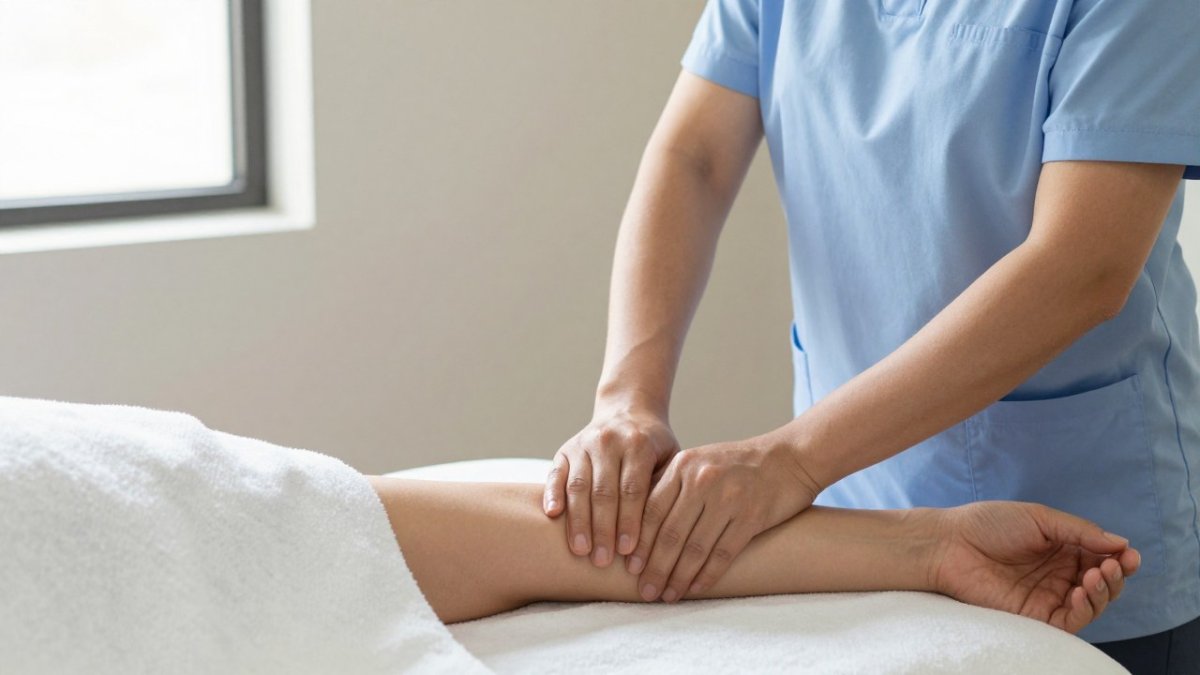
A 2009 systematic review found the best evidence left the efficacy of lymphatic drainage an open question. Your schedule should be set by a qualified professional who can assess you, not by a generic chart online.
Frequency Chart by Health Goal
| Goal | Typical Starting Frequency | Notes |
|---|---|---|
| Post-surgical swelling | 2-3 times per week early on | Follow your surgeon's clearance |
| Lymphedema management | Set by your care team | Often ongoing, adjusted over time |
| Lipedema support | Varies by stage and symptoms | Usually part of a broader plan |
| General wellness | Monthly or every 3-4 weeks | Maintenance pace |
| At-home self-care | A few times per week | Gentle, light pressure only |
Treat this as a starting point for a conversation, not a prescription.
How Often Should You Get Lymphatic Drainage Massage After Surgery?
Post-surgical recovery is where frequency matters most, and where the stakes are highest. Provider examples in the research suggest two to three sessions per week during the first two to three postoperative weeks, from plastic surgery provider guidance. After that early window, most plans taper toward weekly or bi-weekly sessions as swelling settles.
Swelling does not usually drop in a straight line. Your therapist should reassess at each visit and adjust the schedule rather than locking you into a fixed package.
What most guides skip is how to coordinate that schedule with your surgeon. Post-operative timing and frequency depend on the procedure, the healing stage, and your care team's instructions, not on a universal calendar. Before your first session, ask your surgeon three questions: when can I start manual lymphatic drainage, are there any restrictions on pressure or positioning, and what swelling or symptoms should trigger a call back to the office. Bring those answers to your therapist. The exact timing for starting drainage varies by procedure, so written clearance from your surgeon is worth requesting.
Progress should be assessed with observable measures, not just how you feel. Useful markers include limb circumference measured at consistent points, how easily clothing or compression garments fit, comfort during the day, and mobility such as shoulder or knee range of motion. A therapist can track these at each visit and share them with your surgeon. When swelling is stable or improving and comfort is good, spacing sessions further apart is reasonable. When swelling increases, comfort worsens, or mobility stalls, the plan should be reassessed rather than simply adding more sessions.
Watch out: if swelling suddenly increases, the area becomes hot or red, or you develop a fever, contact your surgeon or doctor, because those signs can indicate infection or a clot rather than normal post-operative swelling.
Get your surgeon's clearance first.
How Often Should You Get Lymphatic Drainage Massage for Lipedema?
Lipedema is a chronic condition, so the schedule looks different from short-term post-op care. There is no universal interval for lipedema, and anyone claiming one should be viewed with caution. Frequency is generally set by your care team based on symptoms, stage, and how you respond.
Some people use weekly sessions during flare-ups and less frequent maintenance otherwise, while others need more support. Consistency over months is generally emphasized. If you are searching for a qualified provider near you, our guide on how to find a lymphatic specialist covers the questions to ask before booking.
How Often Should You Do Lymphatic Drainage Massage at Home?
Home self-massage is a useful supplement, not a replacement for professional care. Many people use short sessions a few times per week, with very light pressure, moving toward the heart. Your therapist can confirm the right routine for you.
Three rules for doing it safely at home:
- Use light pressure only. Lymph vessels sit just under the skin.
- Work in the direction of lymph flow, toward the torso.
- Stop if you feel pain, dizziness, or new swelling.
If you have lymphedema or are recovering from surgery, get your technique checked by a professional first. To understand the mechanics behind the strokes, read how lymphatic drainage massage works.
How Long Should You Wait Between Lymphatic Massages?
Wait times depend on intensity and purpose. For wellness sessions, spacing visits several weeks apart is a common approach. For post-op care, the schedule is set by your surgeon and therapist and typically spaces out as swelling reduces.
A simple rule: the more acute the swelling, the closer together the early sessions. As symptoms ease, space them out. Back-to-back sessions on the same day are generally not advised, as tissue needs time to respond.
When Not to Book: Safety Screening and Coordination With Your Clinician
Lymphatic drainage is gentle, but it is not right for everyone at every moment. Skip booking and call your doctor if you have:
- An active infection, fever, or cellulitis
- Untreated congestive heart failure
- A blood clot or suspected deep vein thrombosis
- Recent surgery without surgeon clearance
A practical screening process starts before you book. Ask whether the therapist holds manual lymphatic drainage certification and how they screen for medical conditions. At the appointment, expect questions about your health history, medications, recent surgeries, and any diagnosed swelling conditions. Bring a list of your medications and any relevant medical records. If you have lymphedema, a history of cancer treatment, or a known clotting disorder, get clinician approval before your first session. That screening helps ensure lymphatic drainage services are appropriate for your health history and that any treatment plan is coordinated with your clinician.
Manual lymphatic drainage has clinical support for managing lymphedema and some post-surgical swelling. Claims about detoxing, sculpting, or weight loss are not supported by strong evidence, and anyone promising dramatic detox results should be viewed with caution.
Coordination with your clinician matters most when you are recovering from surgery or managing a chronic condition. Share your surgery date, any restrictions, and your therapist's proposed schedule with your care team. If your clinician gives specific instructions, follow those over any general recommendation. When in doubt, ask your therapist to communicate directly with your doctor's office.
Watch out: if you have unexplained swelling, pain in one leg, chest pain, or shortness of breath, seek urgent medical assessment rather than booking a massage, because those symptoms can signal a clot or other serious condition.
If you are unsure about timing, our recovery guide on when you can get a massage after surgery walks through safe windows and clearance steps.
Planning Your Lymphatic Drainage Sessions in Northwest Indiana
If you are looking for lymphatic drainage massage near me in Hobart or the surrounding communities, plan around three things: your goal, your clinician's guidance, and a realistic taper. Start with a clear assessment, set a short-term schedule, then adjust every few visits based on real results.
We serve Hobart, Merrillville, Crown Point, Valparaiso, Gary, Hammond, Highland, and the Chicagoland area. Our practice specializes in post-operative lymphatic drainage, and our therapist is a Board Certified Licensed Massage Therapist and Marine Corps veteran. Sessions are tailored to your needs, and mobile service options are available.
To reduce post-op swelling alongside your massage schedule, our step-by-step swelling guide covers elevation, compression, and ice. When you are ready to book, you can schedule post-op lymphatic drainage with our team.
Swelling that will not settle, limited mobility, or a recovery that feels stuck deserves a real assessment, not guesswork. Lavendura Massage & Bodywork offers customized lymphatic drainage sessions built around your body and your surgeon's guidance, with mobile service options for clients who cannot travel easily. Get started with Lavendura Massage & Bodywork and build a recovery plan that fits your life.
Frequently Asked Questions
How long should you wait between lymphatic massages?
There is no single universal interval. Provider recommendations range from once every three to four weeks for maintenance to two to three times weekly during the first two to three postoperative weeks. The research evidence on efficacy and ideal frequency remains limited. Ask your therapist and, after surgery, your surgeon to set the spacing for your situation.
Can you overdo lymphatic massage?
Yes, more is not automatically better. Tissue can become sore or irritated with too-frequent or too-firm work, and the research does not support a fixed maximum number of sessions. Frequency should taper as swelling settles: a short-term intensive schedule for post-surgical recovery or lymphedema care, then a maintenance rhythm. Stop and check with your clinician if swelling worsens, skin becomes discolored, or you feel weak or in pain after a session.
How often should you do lymphatic drainage massage at home?
Home self-massage is generally used as a light daily or near-daily complement to professional care, not a replacement for it. Keep the pressure gentle and follow the direction your therapist teaches you, usually toward the lymph nodes. If you are managing lymphedema or recovering from surgery, confirm the routine with your healthcare professional first, since the right frequency depends on your stage of healing and any contraindications.
How long do lymphatic drainage massage results last?
Results vary by goal. For general wellness and de-bloating, effects are often temporary and best maintained with regular sessions spaced weeks apart. For post-surgical swelling, improvement typically builds across a short-term series of visits and tapers as recovery progresses. For lymphedema, lymphatic drainage is a proven treatment that is usually part of an ongoing plan rather than a one-time fix. Claims that it produces weight loss or detoxification in healthy people are not well supported.