 blog
Can Therapeutic Massage Ease Hip Pain?
Last Updated: November 19, 2026
Quick Summary
Therapeutic massage for hip pain eases muscle tension around the hip joint, improves blood flow, and helps you move with less discomfort, but it works on the muscles around the hip, not the joint itself. Use it as part of a broader plan rather than a cure for joint disease.
- A 2026 randomized controlled trial found Swedish massage and hip-strengthening exercises were equally effective for hip osteoarthritis pain.
- A therapist's hip session typically starts with a 5-10 minute intake and gait check before any hands-on work.
- For self-massage, keep pressure at a 4 out of 10 on the pain scale and stay on muscle, never bone.
- For hip bursitis, work the gluteus medius and outer thigh and skip deep pressure over the bony point.
- See a doctor before booking if you have fever, sudden swelling, a recent fall, or pain that wakes you at night.
Table of Contents
- How Therapeutic Massage Targets Hip Pain
- Hip Anatomy: Muscles, Trigger Points, and Pain Locations
- Massage Techniques for Hip Pain: Swedish, Deep Tissue, and More
- Self-Massage for Hip Pain: A Step-by-Step Routine
- How to Massage Hips and Thighs Safely at Home
- Massage for Hip Bursitis: What Helps and What to Avoid
- Finding Massage for Hip Pain Near Me: What to Look For
- When to See a Medical Professional Before Booking
- Frequently Asked Questions
How Therapeutic Massage Targets Hip Pain
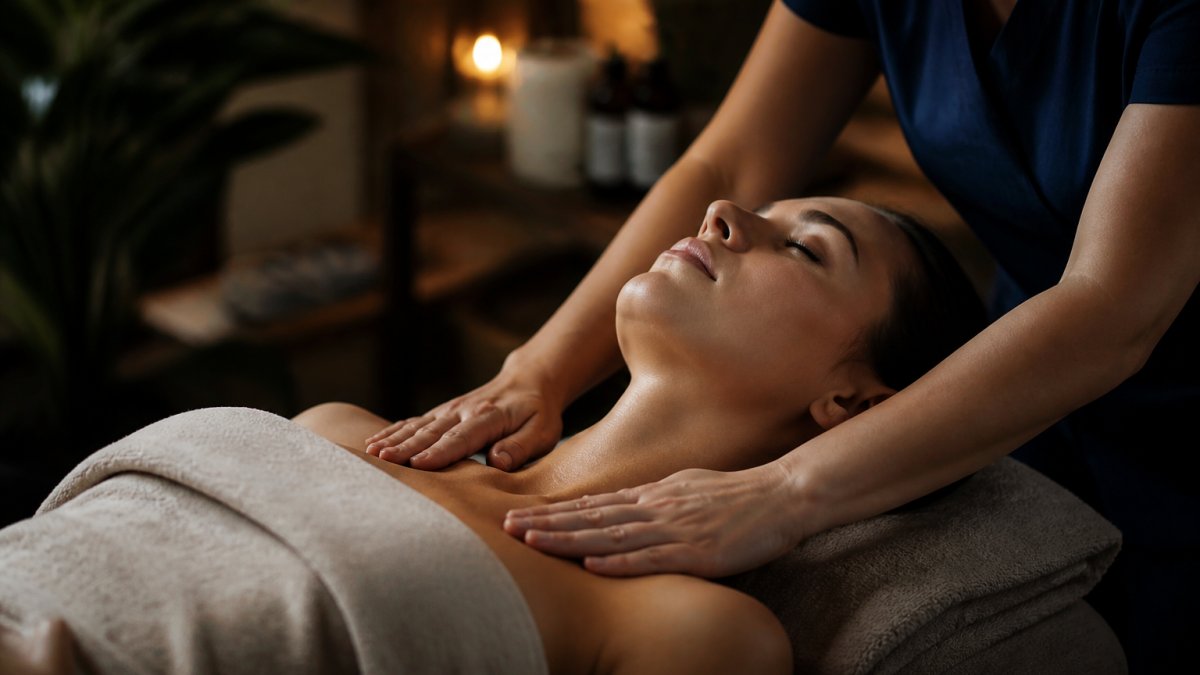
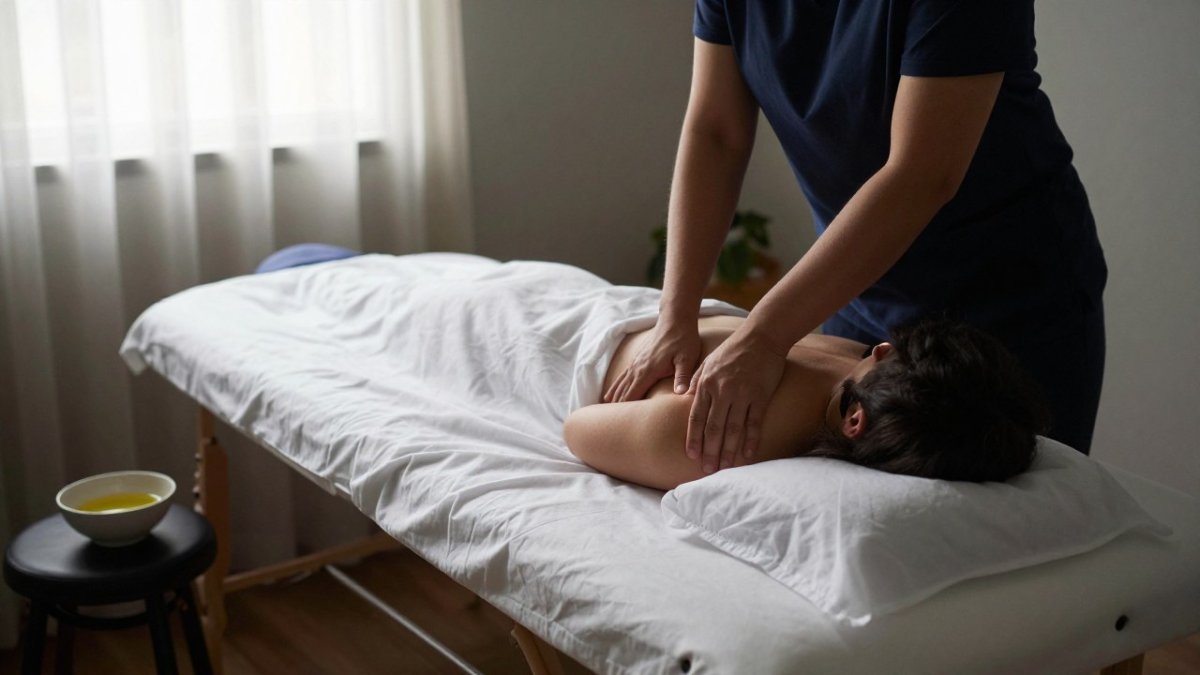
Therapeutic massage for hip pain is a hands-on treatment that eases muscle tension around the hip joint, improves blood flow, and helps you move with less discomfort. It is best used as part of a broader plan, not as a cure for joint disease.
Here's the key point most people miss: massage works on the muscles around the hip, not the joint itself.
A review of hip pain and massage notes that massage does not treat the joint, a nerve, or an inflamed bursa. So it may not fix every cause of hip pain.
What it can do is calm the soft tissue that guards a sore hip. Tight glutes and hip flexors pull on the joint and change how you walk. Loosening them can lower pain and restore mobility.
Hip Anatomy: Muscles, Trigger Points, and Pain Locations
Your hip is a ball-and-socket joint wrapped in layers of muscle. Where it hurts tells you which layer is likely involved.
- Gluteus medius and minimus: side of the hip, near the greater trochanter. Common trigger points here refer pain down the outer thigh.
- Deep external rotators: behind the hip. Tightness can mimic sciatica.
- Hip flexors: front of the hip and groin. Sitting all day shortens them.
- Adductors: inner thigh. They pull on the hip with every step.
Muscular pain usually feels dull and spreads. Joint pain tends to sit in the groin and pinch when you rotate the leg.
If your pain runs down the leg, our guide on massaging sciatica pain covers the overlap between hip and nerve symptoms.
Massage Techniques for Hip Pain: Swedish, Deep Tissue, and More
Swedish massage uses long gliding strokes, kneading, and gentle pressure to boost blood flow and relaxation. Deep-tissue massage works slower and deeper into muscle tension and trigger points. Both have a place, and the right choice depends on what's driving your pain.
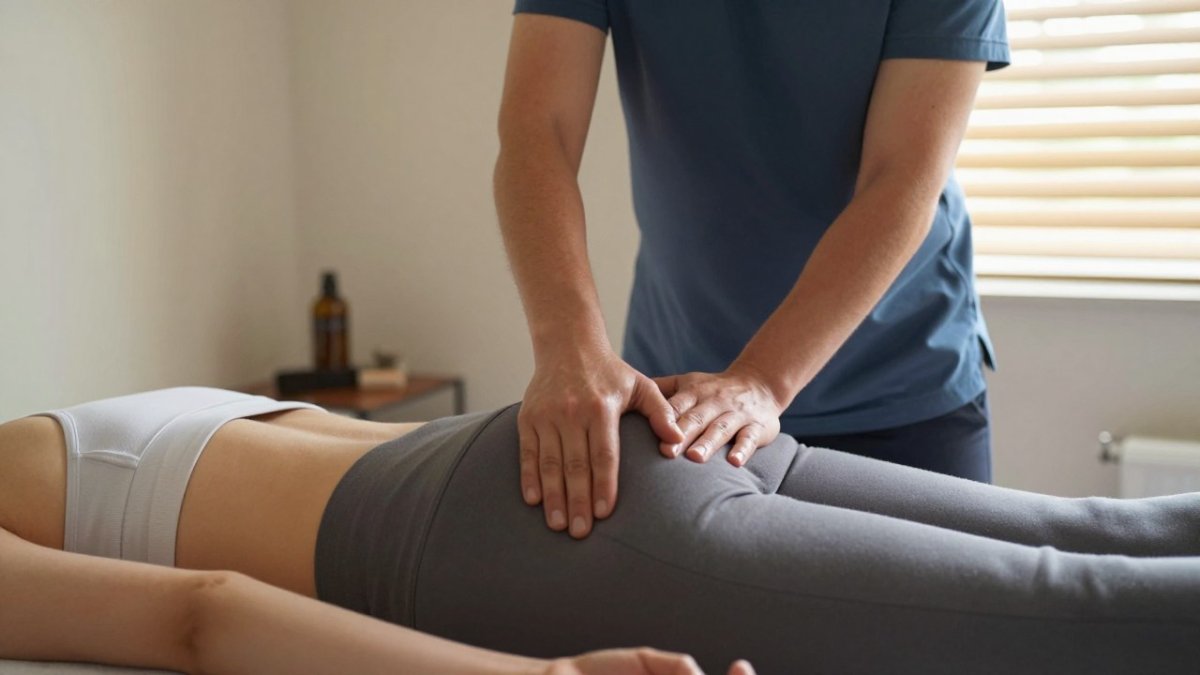
A 2026 randomized controlled trial found Swedish massage and hip-strengthening exercises were equally effective for hip osteoarthritis pain, according to research in the Journal of Bodywork and Movement Therapies. That's a useful finding: you don't have to choose one over the other.
How a therapist actually sequences a hip session
Most practitioners follow a similar arc, and knowing it helps you judge whether a session is built for pain relief or just relaxation:
- Intake and gait check. The therapist asks where the pain sits, watches you walk a few steps, and notes which side drops or rotates. This takes 5-10 minutes and shapes everything after.
- Warm-up. Broad, light Swedish strokes over the glutes, lower back, and outer thigh for several minutes to warm tissue and let you relax into pressure.
- Targeted work. Slower deep-tissue strokes, sustained pressure, and active trigger-point release into the gluteus medius, gluteus minimus, and deep external rotators.
- Hip flexor and adductor work. Front-of-hip and inner-thigh tension is addressed with shorter strokes and pin-and-stretch, since these muscles are sensitive and easy to overwork.
- Cool-down and reassessment. Gentle flushing strokes, then a repeat of the movement that hurt at the start so you can feel the change.
Matching technique to presentation
- Stubborn glute and hip flexor tension, no sharp joint pain: deep tissue with trigger-point work and contract-relax fits best.
- Acute flare-up, older adults, or first-time clients: Swedish and lighter myofascial work, with pressure kept moderate.
- Pain that mimics sciatica: deep external rotator and piriformis work, done carefully and never so deep that it reproduces nerve symptoms.
- Post-activity soreness: Swedish plus gentle stretching, ideally within a day or two of the activity.
A common pattern is that deep pressure feels productive in the moment but leaves you sore for 24-48 hours. That soreness is normal; sharp pain during the session is not, and a good therapist backs off when you flinch or guard.
For a closer look at how pressure and trigger-point work release tension, see how therapeutic massage eases muscle tension.
Here is how each technique is matched to a presentation.
| Presentation | Technique | Note |
|---|---|---|
| Stubborn glute and hip flexor tension, no sharp joint pain | Deep tissue with trigger-point work and contract-relax | Fits best |
| Acute flare-up, older adults, or first-time clients | Swedish and lighter myofascial work | Pressure kept moderate |
| Pain that mimics sciatica | Deep external rotator and piriformis work | Never so deep it reproduces nerve symptoms |
| Post-activity soreness | Swedish plus gentle stretching | Ideally within a day or two of the activity |
Self-Massage for Hip Pain: A Step-by-Step Routine
Self-massage for hip pain is a short daily routine you can do at home with a ball, a foam roller, or your hands. It won't replace professional work, but it keeps muscles loose between sessions and gives you a way to manage flare-ups on your own schedule. When flare-ups persist despite a steady routine, ESSpa can help you consider how massage tailored to your needs might fit into your care.
Pick your tool
- Tennis ball: the most forgiving option for glutes and side-hip work. Good for beginners.
- Lacrosse or massage ball: firmer, for stubborn glute and external rotator spots once you know your tolerance.
- Foam roller: best for the outer thigh and IT band area, not for the bony point of the hip.
- Your hands: the only sensible choice for the front hip crease and inner thigh, where a ball can press too hard on sensitive structures.
The 10-minute sequence
- Warm up. Walk for 3 minutes to get blood flowing.
- Glute roll. Sit on a tennis ball on the affected side. Roll slowly for 60 seconds, pausing on tight spots for 20-30 seconds each.
- Side hip. Lie on the ball near the greater trochanter, but keep the ball on the muscle just above and behind the bony point, never directly on it.
- Hip flexor press. Lie face down. Press fingers into the front hip crease for 30 seconds, staying shallow and away from the groin.
- Thigh sweep. Use both hands to stroke up the outer thigh 10 times.
- Stretch. Finish with a gentle hip flexor stretch, 30 seconds per side.
Dosing and progression
Keep pressure at a 4 out of 10 on the pain scale, uncomfortable but not sharp. If a spot is too tender to touch, back off to a lighter tool or skip it and mention it at your next professional session. Progress by adding time on tight spots, not by pressing harder.
Watch out: rolling directly over the greater trochanter or the inner groin can irritate the bursa or press on sensitive structures, stay on muscle bellies.
What self-massage can and cannot do
Self-massage is symptom management. It can ease muscular tightness and take the edge off between sessions, but it does not treat joint arthritis, a labral tear, or nerve compression. If pain is sharp, shoots below the knee, or keeps you from bearing weight, self-massage is not the right tool, get evaluated first.
Stop if pain sharpens or shoots down the leg.
How to Massage Hips and Thighs Safely at Home
Knowing how to massage hips and thighs safely means respecting pressure limits and avoiding sensitive spots. The goal is tension release, not deep bruising.
- Work muscle, never bone or the joint line.
- Keep pressure at a 4 out of 10 on the pain scale.
- Avoid the inner groin and any swollen, hot, or red area.
- Use lotion or oil to protect the skin.
- Go slow. Fast, hard strokes cause guarding.
Watch out: pressing hard directly over the greater trochanter can irritate bursitis rather than help it.
Massage for Hip Bursitis: What Helps and What to Avoid
Massage for hip bursitis should target the muscles around the bursa, not the bursa itself. The bursa is a fluid sac over the greater trochanter, and direct pressure on it tends to make pain worse.
Work the gluteus medius and the outer thigh instead. Gentle Swedish strokes and light trigger-point work can reduce the muscle tension that presses on the bursa.
Skip deep, direct pressure over the bony point. If the area is hot, swollen, or sharply tender, that's a sign to see a doctor before booking bodywork.
Finding Massage for Hip Pain Near Me: What to Look For
Searching "massage for hip pain near me" in Hobart turns up plenty of options. The difference between a relaxing spa session and real pain relief comes down to training and assessment.
Look for a licensed therapist who asks about your pain location, your walking and stairs, and your medical history before touching you. Ask whether they do orthopedic or clinical work, not just relaxation.
Our own massage services in Hobart are built around a full intake and a plan tailored to your needs. We're a board-certified practice serving Hobart, Lake County, and the surrounding communities.
Not sure how to vet a therapist? This guide on choosing a massage therapist in Hobart walks through the questions that matter.
When to See a Medical Professional Before Booking
See a doctor before booking massage if you have hip pain with fever, sudden swelling, a recent fall, or pain that wakes you at night. Those point to causes massage can't address.
Other red flags:
- Pain that shoots below the knee
- Numbness or weakness in the leg
- Trouble bearing weight
- A known fracture or joint replacement
If you're weighing whether bodywork is worth it for long-term pain, read is therapeutic massage worth it for chronic pain. And when in doubt, get cleared first. A good therapist will refer you out rather than work on a hip that needs imaging.
Hip pain rarely has one simple fix, and that's exactly why a tailored plan beats a generic spa visit. At Lavendura Massage & Bodywork, we assess your movement, target the muscles driving your pain, and adjust each session as you improve. Our team brings licensed, board-certified massage therapy credentials to every appointment, and mobile service options are available. Schedule your appointment today with Lavendura Massage & Bodywork to discuss your needs.
Frequently Asked Questions
Can therapeutic massage help with hip pain?
Therapeutic massage can reduce hip pain when the cause is muscle tension, trigger points, or stiffness in the glutes, hip flexors, or deep external rotators. Massage does not treat the hip joint itself, so pain from arthritis, impingement, or bursitis may need a combined approach with medical care.
What type of massage is best for hip pain?
Deep-tissue massage suits chronic muscle tension in the glutes and hip flexors, while Swedish massage with long gliding strokes helps relaxation and blood flow. For hip bursitis, gentler techniques around the greater trochanter are safer than deep pressure directly on the inflamed area. A trained therapist can assess your pain location and tailor the session, which matters more than the label on the menu.
How do you massage your hip and thigh safely?
Use self-massage for hip pain with a foam roller or massage ball, applying gentle pressure to the glutes, hip flexors, and thigh muscles for 30 to 60 seconds per spot. Avoid pressing directly on the hip joint, the greater trochanter, or any area with sharp pain. Stop if you feel numbness or radiating pain, and see a medical professional if symptoms persist or worsen.
When should you avoid massage for hip pain?
Skip massage if you have a fever, an open wound, a recent fracture, or suspected infection, and check with a doctor first if pain comes from the joint itself, such as hip impingement or advanced arthritis. Massage addresses soft tissue, not the joint, a nerve, or an inflamed bursa. Seek medical care for sudden severe pain, inability to bear weight, or pain that follows a fall.