 How-to
How Do You Choose a Massage Therapist in Hobart?
Last Updated: November 1, 2026
Quick Summary
To choose a massage therapist in Hobart, verify their current state license, check any board certification or specialty training relevant to your concern, and ask how they assess new clients before treatment. Referrals from your physician or surgeon can also help. Clear, specific answers to your questions usually signal a practitioner who takes the work seriously.
- Confirm the license number is current with the issuing state licensing agency.
- Look for board certification or specialty training that matches your specific concern.
- Ask how the therapist assesses you before starting treatment.
- Ask whether they will coordinate with your physician or surgeon if needed.
- Confirm pricing directly with the practice before booking.
Table of Contents
- Why the Right Massage Therapist Matters for Chronic Pain and Muscle Tension
- What Credentials to Verify Before You Book
- How to Find a Reputable Massage Therapist in Hobart
- Questions to Ask a Massage Therapist Before Booking
- Checklist for Evaluating Potential Therapists
- What to Expect at a First Massage Appointment
- Booking Your First Session With Lavendura Massage & Bodywork
- Frequently Asked Questions
Why the Right Massage Therapist Matters for Chronic Pain and Muscle Tension
Choosing a massage therapist in Hobart is a decision that affects how you move, sleep and recover, so it deserves more care than picking the first name that appears in a search. At Lavendura Massage & Bodywork, we see clients who arrive after months of chronic pain or muscle tension and who have already tried a session or two without lasting relief. The difference usually comes down to whether the therapist is working with a clear assessment and a specific goal. A clear assessment also helps distinguish when hands-on treatment is appropriate and when self-care can support recovery between sessions, a balance worth considering alongside FloatWell.
Massage therapy is a broad field. Some practitioners focus on relaxation, others on clinical work tied to a diagnosed condition, and others on recovery after surgery. A therapist who is skilled at one of these may not be the right fit for another. Before you book, it helps to be clear about what you want the work to accomplish.
The U.S. Bureau of Labor Statistics notes that massage therapists discuss clients' symptoms, medical history and treatment goals, and evaluate clients before and during a massage to locate painful or tense areas (Massage Therapists : Occupational Outlook Handbook: : U.S. Bureau of Labor Statistics). That assessment step is a useful benchmark. A session that begins with a thorough conversation about your concerns is more likely to be tailored to you than one that starts with a generic routine. If you are considering massage after surgery or injury, our guide on when you can safely get a massage after surgery covers timing, safety and how to get surgeon clearance. Massage Therapists, Occupational Outlook Handbook
What Credentials to Verify Before You Book
Credentials are the first filter. In the United States, massage therapy is regulated at the state level, so the licensing rules a therapist must meet depend on where they practice. Many states require massage therapists to hold a license, and you can check whether a practitioner's license is current with the state licensing agency before you book.
Look for the license number and confirm it with the issuing state board. Beyond the basic license, some therapists hold board certification or specialty training, which gives you an independent standard to compare against.
Specialty training matters when your concern is specific. Lymphatic drainage, medical massage and post-operative work each require additional coursework. Ask which training the therapist completed and how many hours of hands-on practice it involved.
Credentials are the first filter, and the key checks are summarised below.
| Check | What to confirm | Where |
|---|---|---|
| State licence | Licence is current and the number is verifiable | State licensing agency |
| Board certification | Independent standard to compare against | Certifying board |
| Specialty training | Relevant coursework for your concern | Ask the therapist |
| Hands-on hours | How many hours the training involved | Ask the therapist |
How to Find a Reputable Massage Therapist in Hobart
Start with referrals. A physician, physical therapist or surgeon may be able to recommend a therapist who works with patients in your situation, particularly if you are recovering from an operation or managing a diagnosed condition. Ask the therapist whether they coordinate with your care team.
Next, review the therapist's own materials. A clear description of services, a named practitioner and verifiable license information are signs of a practice that is transparent about its work. Be cautious of businesses that make broad promises about curing pain. Massage can help with muscle tension and discomfort, but it is not a guaranteed cure for every condition.
Read reviews with some caution. Look for patterns in what clients describe, such as whether they felt listened to and whether the therapist explained the plan. Compare several sources before deciding.
Questions to Ask a Massage Therapist Before Booking
A short phone call or message can tell you a lot. Consider asking:
Schedule your appointment today →
- What is your license number, and is it current with the state board?
- Do you hold any board certification or specialty training relevant to my condition?
- How do you assess a new client before starting treatment?
- Will you work with my physician or surgeon if I need coordinated care?
- How do you adjust pressure and technique if I feel discomfort?
- What is your cancellation and rescheduling policy?
- Do you offer in-clinic and mobile sessions, and what areas do you cover?
Pay attention to how the therapist answers. Clear, specific responses usually signal a practitioner who takes the work seriously. Vague answers are worth noting.
Checklist for Evaluating Potential Therapists
Use this checklist to compare options side by side:
- Current state license with a verifiable number
- Board certification or relevant specialty training
- Experience with your specific concern (chronic pain, post-operative care, sports recovery)
- A structured intake assessment before the first treatment
- Willingness to coordinate with your physician or care team
- Clear communication about pressure, comfort and goals
- Transparent scheduling and cancellation policies
- Clear pricing confirmed directly with the practice before booking
- Hygiene practices and a comfortable, private treatment space
Most people find that a therapist who meets the first four items is a strong candidate, even if the others vary. Confirm pricing directly with the practice, since rates depend on session length, service type and any specialized work involved.
What to Expect at a First Massage Appointment
A first visit usually begins with intake paperwork and a conversation about your health history, current symptoms and goals. The therapist will ask where you feel pain or tension, what has helped before and what has not. This is also the time to mention any recent surgery, medications or conditions that affect how the massage should be performed.

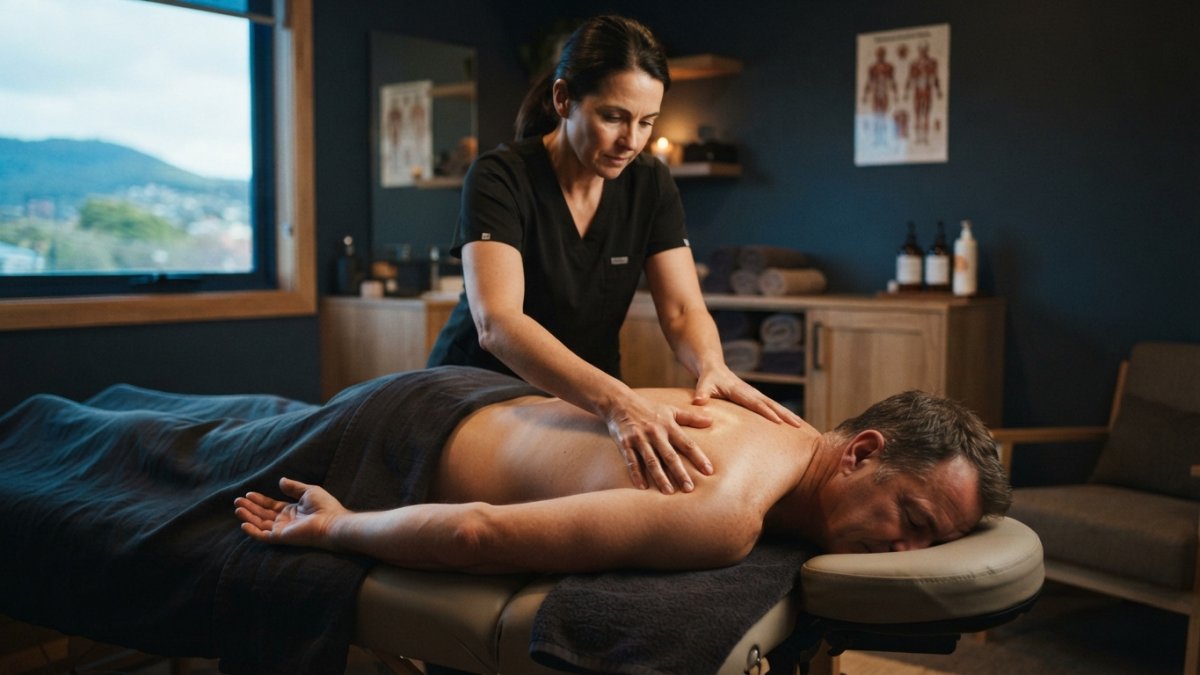
The treatment room should feel private and organized, with a massage table, clean linens and adjustable lighting. You will be asked to undress to the level you are comfortable with and to cover yourself with draping. Communicate throughout the session. If the pressure is too strong or too light, say so. A good therapist will adjust without making you feel rushed.
After the session, a skilled therapist will explain what they noticed and suggest a plan, which may include a follow-up schedule or self-care steps.
Booking Your First Session With Lavendura Massage & Bodywork
If you are looking for clinical work tied to chronic pain, post-operative recovery or lymphatic drainage, Lavendura Massage & Bodywork offers specialized treatment built around your concerns. Our practitioner is a Marine Corps veteran and a Board Certified Licensed Massage Therapist, and the practice offers mobile service options for clients who have difficulty leaving home.
Review our state licensing information for massage therapists. To find out whether a session fits your needs, contact us with your questions and availability, or read our post-operative lymphatic drainage service details to see what the treatment involves. Our FAQ answers common questions about booking, and you can learn more about our practitioner's background and qualifications before you schedule.
When you are ready, schedule your appointment today.
Frequently Asked Questions
How do I choose a good massage therapist in Hobart, Indiana?
Start by confirming the therapist holds a current state license. Massage therapists are licensed at the state level, and you can verify a license status with the state's licensing agency. Then look at whether the practice describes its approach to your specific concern, such as chronic pain or post-surgical care. Ask how sessions are tailored, and choose someone whose communication style makes you comfortable describing symptoms and feedback during treatment.
What should I ask a massage therapist before booking?
Ask about their training and whether they hold any additional certifications related to your concern. Ask how they assess your condition at the start of a session and how they adjust pressure and technique. Ask whether they work with clients who have medical conditions or recent surgery, and whether they will coordinate with your physician or physical therapist. Pricing questions are reasonable too. Ask the practice directly for current rates, since costs vary and are not listed in this article.
Should I tell my massage therapist about pain or health conditions?
Yes. Sharing your medical history, current medications, recent surgeries, and areas of pain helps the therapist decide what is appropriate. Some conditions, such as blood clots, recent surgery, or certain skin conditions, may require modified treatment or a physician's clearance first. A licensed therapist will ask intake questions, and you should answer them honestly. General information here cannot replace an individual assessment by your healthcare provider.
What should I expect at a first massage therapy appointment in Hobart?
Expect an intake conversation before the massage begins. The therapist will ask about your symptoms, goals, medical history, and any pressure preferences. You will typically undress to the level you are comfortable with and be draped with a sheet, with only the areas being worked on exposed. You can speak up at any time about pressure or discomfort. Afterward, a good therapist will explain what they observed and suggest whether follow-up sessions might be useful.