 How-to
What Is the Best Way to Massage Sciatica Pain?
Table of Contents
- Why Massaging Sciatica Pain Works (and When It Doesn't)
- Sciatica Massage Techniques That Target the Real Source
- Piriformis Massage for Sciatica: The Muscle Most People Miss
- Self-Massage for Sciatica You Can Do at Home
- How Long to Massage Sciatica: Timing, Pressure, and Frequency
- Common Mistakes and When to See a Professional
- Frequently Asked Questions
Last Updated: October 16, 2026
Why Massaging Sciatica Pain Works (and When It Doesn't)
Massage helps sciatica by easing the tight muscles that press on the sciatic nerve. It does not fix a herniated disc or bone spur. That difference matters before you start.
Sciatica is pain that travels along the sciatic nerve, which runs from your lower back through your hip and down each leg. The nerve can be irritated by a disc, spinal narrowing, or a muscle clamping down on it. Massage targets the muscle side of that problem.
At Lavendura Massage & Bodywork in Hobart, Indiana, we see this every week. Many clients arrive after months of stretching with no relief. Often, the muscle was never the whole story.
A common mistake is treating massage as a cure for every kind of leg pain. It is not.
Massage works well when:
- Your pain comes from muscle tightness or spasms
- The glutes, hips, or lower back feel hard and tender
- Pain worsens after sitting, driving, or standing still
Massage will not fix:
- A disc pressing directly on the nerve
- Numbness, weakness, or loss of bladder control
- Pain that follows a fall or injury
Those signs need a doctor first. Massage can still help later, as part of a recovery plan.
Sciatica Massage Techniques That Target the Real Source
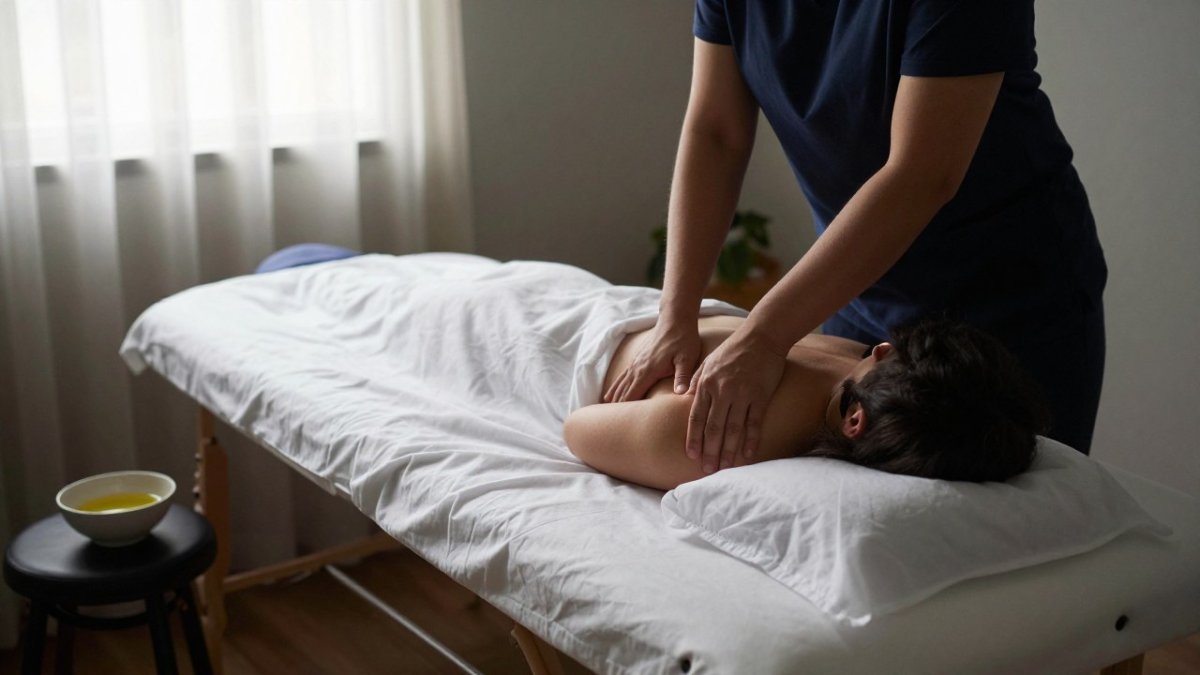
The best sciatica massage techniques work the muscles around the nerve, not the nerve itself. Pressing directly on the sciatic nerve can make pain worse. Skilled therapists work the glutes, hip rotators, and lower back instead.
Glute and Deep Hip Work
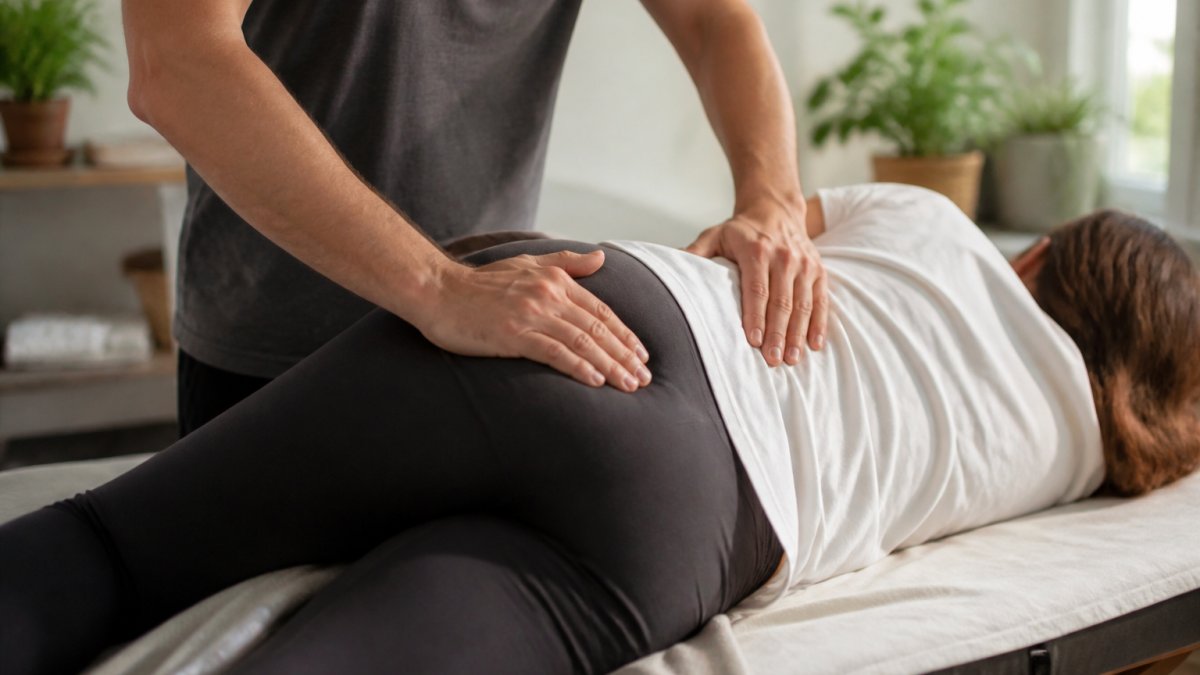
The glutes do most of the heavy lifting here. When these muscles tighten, they can trap the sciatic nerve underneath them.
A therapist uses slow, sustained pressure with a forearm, elbow, or thumb. The goal is to release the muscle, not to dig into the pain. Expect firm but tolerable pressure.
You may feel a dull ache that fades. Sharp, shooting pain is a signal to ease off.
Lower Back and Hamstring Release
Tight hamstrings pull on the pelvis and add strain to the lower back. Releasing them takes pressure off the whole chain.
This work is gentler than glute massage. Long, slow strokes along the back of the thigh loosen the muscle without aggravating the nerve.
Most sessions combine both areas. One without the other rarely holds.
Piriformis Massage for Sciatica: The Muscle Most People Miss
Piriformis massage for sciatica targets a small muscle deep in the buttock that the sciatic nerve passes under or through. When this muscle tightens, it can pinch the nerve and cause sharp pain down the leg.
The piriformis is about the size of your hand and sits under the glute. You cannot reach it with a foam roller. It needs direct, careful pressure.
A therapist locates it by finding the tender spot near the center of the buttock. Then they apply slow pressure and hold until the muscle lets go.
This is where most home routines fail. People roll their glutes for weeks and wonder why nothing changes. The piriformis sits too deep for surface tools.
Signs the piriformis may be involved:
- Pain that worsens when you sit or cross your legs
- A deep ache in one buttock
- Pain that eases when you lie on your back
If those match your symptoms, tell your therapist. It changes where they focus.
Self-Massage for Sciatica You Can Do at Home
Self-massage for sciatica can ease tight muscles between professional sessions. It works best as a daily habit, not a one-time fix. Use a ball, roller, or your hands, and stop if pain sharpens.
Schedule your appointment today →
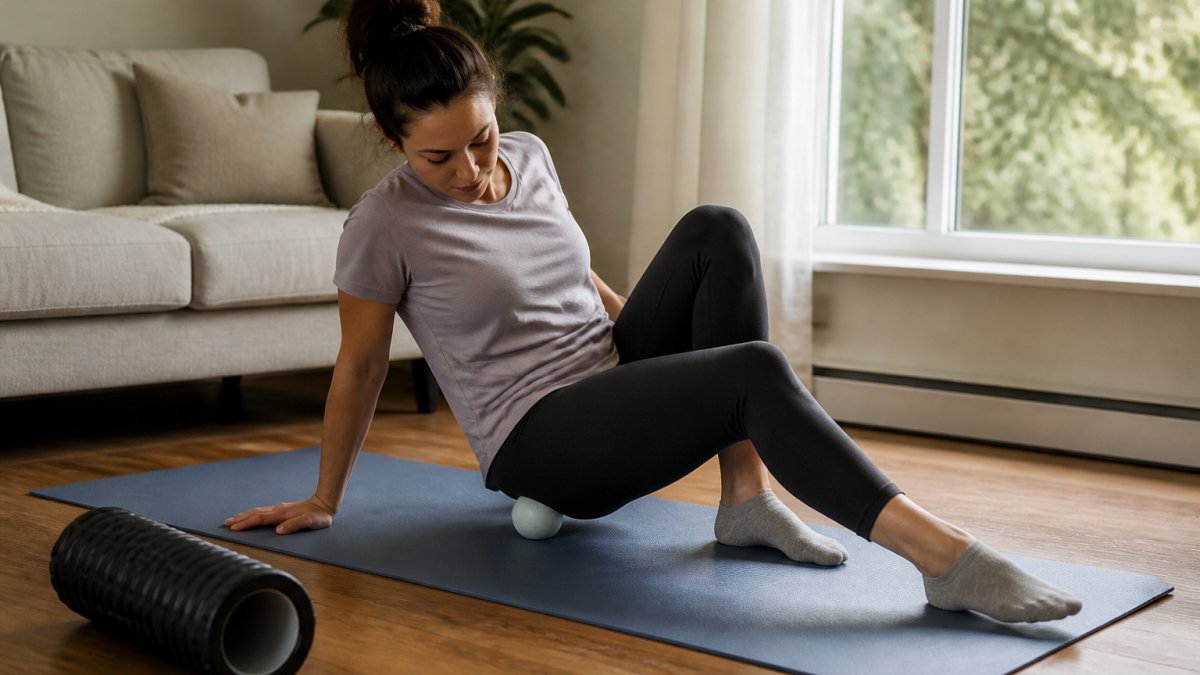
Start with the glutes, then move to the hamstrings and lower back. Keep pressure moderate. You want a good stretch, not a grimace.
Tools and Positions That Make It Easier
The right tool and position make self-massage safer and more effective. A tennis ball works for most people. A lacrosse ball is firmer and better for deep glute work.
Try these setups:
- Glutes: Sit on a ball on a firm chair. Lean toward the sore side.
- Hamstrings: Sit on the floor with the ball under your thigh. Roll slowly.
- Lower back: Lie on your back with a roller under your mid-back. Keep your hips on the floor.
Move slowly. Spend 30 to 60 seconds on each tender spot.
How Long to Massage Sciatica: Timing, Pressure, and Frequency
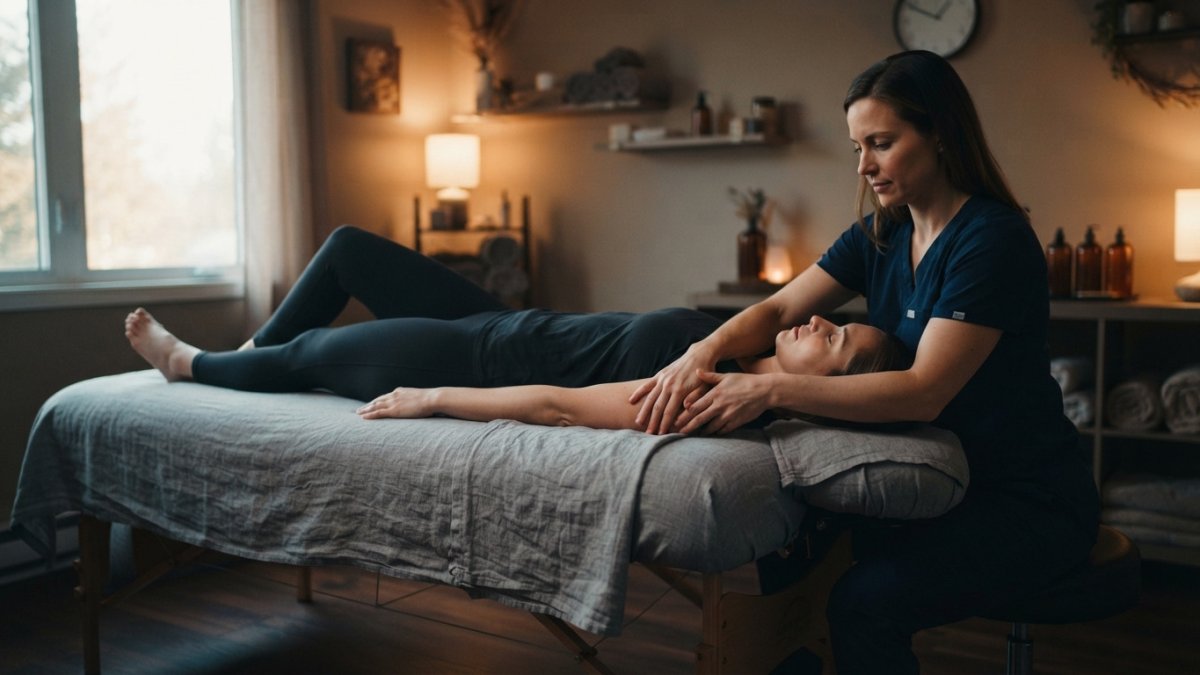
How long to massage sciatica depends on the method. Self-massage works best in short daily sessions of 5 to 10 minutes. Professional sessions usually run 30 to 60 minutes and are spaced one to two weeks apart.
More pressure is not better. The goal is to relax the muscle, and muscles release under steady, moderate pressure. Hard, fast work often causes the muscle to guard harder.
| Method | Session Length | Frequency | Pressure Level |
|---|---|---|---|
| Self-massage with a ball | 5-10 minutes | Daily | Light to moderate |
| Foam roller routine | 5-10 minutes | Daily or every other day | Light to moderate |
| Professional massage | 30-60 minutes | Every 1-2 weeks | Moderate to firm |
| Piriformis-focused work | 15-30 minutes | 1-2 times per week | Firm, held steady |
Start lighter than you think you need. Add pressure only when the muscle softens.
For flare-ups, shorter and more frequent beats long and intense. A 5-minute session twice a day often helps more than one 20-minute session.
Common Mistakes and When to See a Professional
Most sciatica massage fails for one of three reasons: too much pressure, the wrong muscle, or a nerve problem that massage cannot fix. Fixing those three things changes your results.
The mistakes we see most:
- Digging hard into the painful spot instead of the tight muscle
- Rolling the glutes but skipping the piriformis and hamstrings
- Massaging for an hour once and expecting lasting relief
- Ignoring numbness or weakness and pushing through it
Massage is a tool, not a diagnosis. If your pain is getting worse, not better, it is time to get help.
See a doctor or physical therapist if you have:
- Numbness or weakness in your leg or foot (Sciatica: MedlinePlus Medical Encyclopedia)
- Pain after a fall or accident
- Loss of bladder or bowel control
- Pain that keeps getting worse despite treatment
Those signs point to a nerve or spine issue that needs medical care. Massage can support recovery later, but it is not the first step.
For muscle-based sciatica, a trained therapist can make a real difference. At Lavendura Massage & Bodywork, our board certified therapist builds each session around your specific pain pattern. We offer customized treatments and mobile service options across Northwest Indiana, including Hobart, Merrillville, and Crown Point.
If you have tried massage before and it did not help, the problem was likely the approach, not the method. Targeted work on the right muscles, at the right pressure, changes the outcome.
Frequently Asked Questions
Can massage help relieve sciatica pain?
Massage can ease sciatica pain when tight muscles in the glutes, hips, or lower back are part of the problem. Working those areas reduces tension that presses on the sciatic nerve. It works best as one part of a broader plan that may include stretching, movement, and guidance from a doctor or physical therapist. If pain runs down the leg with numbness or weakness, get evaluated before relying on massage alone.
Is it safe to massage directly over the sciatic nerve?
Direct, heavy pressure on the sciatic nerve itself is not recommended. The nerve runs deep through the glute and back of the thigh, and pressing hard on it can increase tingling, numbness, or shooting pain. Instead, work the muscles around the nerve, such as the piriformis, glutes, and lower back. A licensed massage therapist trained in sciatica massage techniques knows how to release surrounding tissue without irritating the nerve.
How long should you massage a sore area for sciatica?
For self-massage, work each tight spot for about 30 to 90 seconds, then move on. A full self-massage session for sciatica usually runs 10 to 15 minutes. If you see a professional, sessions often last 30 to 60 minutes depending on your needs. Stop if pain sharpens or travels down your leg, and give the area a day to recover between deeper sessions.
Can massage make sciatica worse?
Yes, if pressure is too deep or applied directly over the nerve. Warning signs include increased numbness, tingling, or pain that shoots further down the leg. Self-massage for sciatica should feel like relief, not sharp pain. If symptoms worsen after a session, stop and see a doctor or physical therapist. A licensed therapist can adjust pressure and technique to keep treatment safe.
Sciatica pain can wear you down, especially when nothing you try seems to help. Lavendura Massage & Bodywork offers customized therapeutic massage built around your pain pattern, not a fixed routine. Our board certified therapist provides post-operative lymphatic drainage, targeted deep tissue work, and mobile service options across Northwest Indiana. Schedule your appointment today and start moving more comfortably.